NaFORRI
Who We Are
We are one of the 16 public National Agricultural Research Institutes (NARIs) under the policy guidance and co-ordination of the National Agricultural Research Organisation (NARO) which was established under the National Agriculture Research Act of 2005.
NaFORRI is located in Kifu, 12km along Mukono-Kayunga road.
Our Vision
Core Values
Our Mandate
NaFORRI News
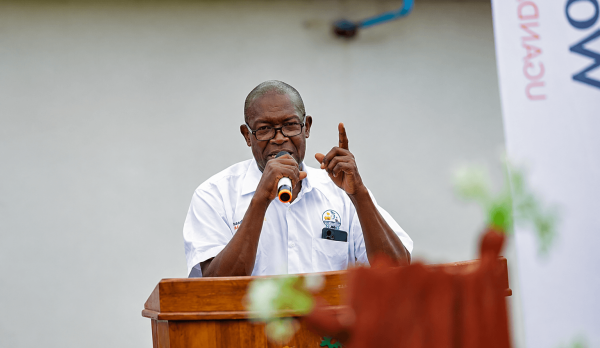
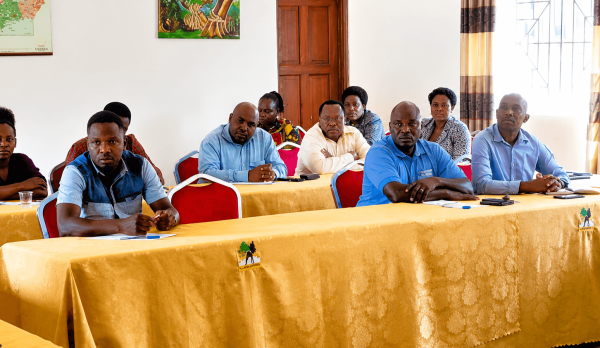
NaFORRI Director of Research Updates Staff on Recent Events in Kifu Forest Reserve
NARO Chairman Calls for Stronger Enforcement of Forest Protection Laws, Urges Focus on Economic Value of Trees
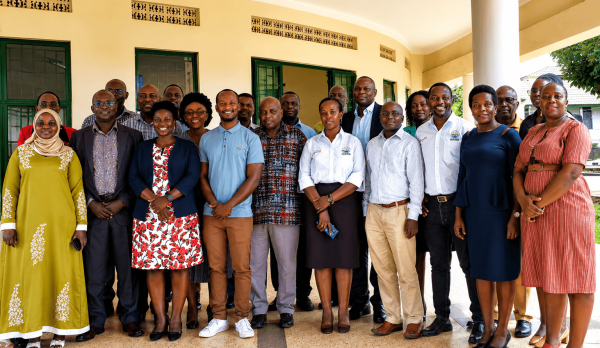
Change of Research Program Leadership at NaFORRI set to intensify forestry research Outputs
NaFORRI launches climate-smart black soldier fly project to revolutionize Avocado waste management
From Backyard Tree to Strategic Resource: How NARO is safeguarding Uganda’s jackfruit diversity
NaFORRI Regional Research Collaborations
NaFORRI, Gatsby Africa collaboration
General Functions
Governance
We conduct agricultural research of strategic importance for knowledge generation and development. Establishment and management of human, physical and financial resources of the institute. Provision of technical back-stoppinng and capacity buuilding to Ministry of Agriculture, Animal Industry and Fisheries, the ZARDIs, and other agencies dealing in agricultural research.
Programs/Activities
The research endeavors at NaFORRI are geared towards maximizing the benefits derived from trees and their resources, emphasizing conservation and sustainable management practices within forests. The establishment of a Memorandum of Understanding with the Kenya Forestry Research Institute (KEFRI) and the Tanzania Forestry Research Institute (TAFORI) signifies a collaborative effort to conduct joint research. This collaboration aims to drive innovations in climate change adaptation, sustainable resilience, and the conservation of environmental and natural resources, ultimately leading to enhanced livelihoods and national development.
Products & Services
Our Research Programs
Research : NaFORRI Publications
This work is an INBAR publication produced as part of the Dutch-Sino East Africa Bamboo Development Programme—Phase II funded by the Ministry of Foreign Affairs of the Kingdom of the Netherlands and the National Forestry and Grassland Administration, China. The Dutch-Sino East Africa Bamboo Development Programme is a Triangular South–South cooperation to support livelihood development, food security, and better environmental management by developing robust bamboo value chains and a sustainable bamboo industry in Ethiopia, Kenya, and Uganda.
Tree pruning is an important tree management option for reducing shading effects and altering whole-tree water use in smallholder farming systems. In this study, sap flow meters (SFM1s) were used to monitor whole- tree water use in Cordia africana (Cordia), Albizia coriaria (Albizia) and Coffea arabica (coffee) trees in two farms in Eastern Uganda.
Overstory trees were subjected to a 50% pruning regime at a 6-month interval over a period of 20 months (July 2018–February 2020). Analysis of variance General Linear Model was performed to assess the influence of tree species, management, season and their interaction on mean daily sap flow.
Pairwise Pearson correlation coefficients between daily sap flow and leaf phenology were also obtained. Pruning altered the synchrony in the vegetative phenology of Albizia trees, as leaf cover changes occurred earlier in pruned trees than in unpruned trees.
Pruned Cordia and Albizia trees respectively used 22.8% and 50.1% less water than unpruned trees whose average daily water use was 76.5L day⁻¹ and 133.7L day⁻¹ respectively. Episodes of reverse flows were observed in Albizia trees (pruned and unpruned) and the pruned Cordia during certain periods of the year. There was a statistically significant main effect of tree species, pruning, season and their interaction on daily tree water use (P < 0.05).
Coffee used 0.1 to 4.3 L of water per day over the 20-month period. While unshaded coffee used more water than shaded coffee, coffee growing under pruned trees used more water than coffee under unpruned trees. This could have resulted from more transpiration pull in coffee resulting from increased radiation with reduced shading.
Subsequently, canopy pruning reduced the water demand of the tree component and resulted in recharge in the crop-rooting zone, although this seemed to appear later following consistent pruning. The study findings demonstrate that agroforestry tree canopy pruning can regulate water use in smallholder agroforestry systems, the benefits of other tree products notwithstanding.
In a bid to curb deforestation and mitigate climate change effects, NaFORRI has developed technologies that improve wood recovery through efficient wood waste utilization. Various products have thus been developed from wood waste such as fuel lighters from saw dust and glulam furniture from timber offcuts.
NaFORRI has conducted research on renewable energy technologies geared towards reducing deforestation. Some of the products generated include energy saving cook stoves, charcoal and briquettes from wood waste and biodiesel from selected energy crops.
NaFORRI is also exploring the potential of various bamboo species for the furniture, construction and energy industry as well as for forest restoration and mitigation of climate change effects. This is premised on the fact that bamboo is a fast-growing plant and that bamboo species have physical and mechanical qualities comparable to those of woody species. Hence, various products have been produced including bamboo fuel, assorted kitchen ware and other artisan furniture.
NaFORRI’s successful intervention of using biological agents to control tree pests and diseases has given hope to hundreds of commercial Eucalyptus farmers who were losing their trees and livelihood. The invasion of exotic pests on the commercial tree growing scene in 2014, created uncertainty for tree growers. Before intervention, the devastating pests such as blue gum chalcid, Red gum Lerp psyllid and Bronze bug were wiping out Eucalyptus trees in Uganda estimated at 50,000 ha, and pausing a likely loss of 1.75 trillion shillings in revenue.
NaFORRI strategic research programs
Research at the Institute is conducted is conducted through four (4) strategic research programs, namely;
- Agroforestry Research Program
- Forest Conservation and Management Research Program
- Forest Products and Services Research Program
- Tree improvement and management program
NaFORRI Mode of Operation
We conduct forestry research through strategic partnerships with research and development organizations including Universities and other tertiary institutes, the private sector, central and local government, statutory authorities and farmer communities.
NaFORRI’s work at a glance
We conduct forestry research through strategic partnerships with research and development organizations including Universities and other tertiary institutes, the private sector, central and local government, statutory authorities and farmer communities.
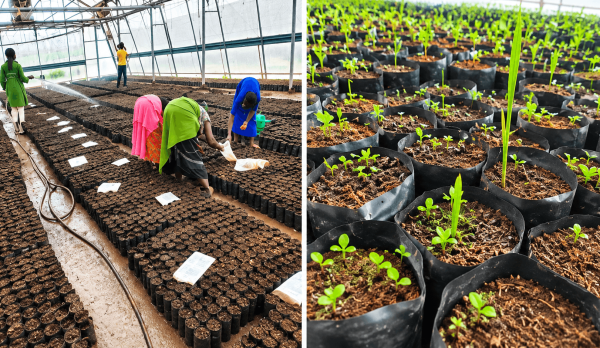
The Institute has made great strides in ensuring sustainable wood supply in Uganda by contributing in supplying quality seedlings of fast growing tree species e.g clonal eucalyptus, Pinus carribea, Melia volkensii, Olea welwitschii (Elgon teak).
In a bid to curb deforestation and mitigate climate change effects, NaFORRI has developed technologies that improve wood recovery through efficient wood waste utilization. Various products have thus been developed from wood waste such as fuel lighters from saw dust and glulam furniture from timber offcuts.
NaFORRI has conducted research on renewable energy technologies geared towards reducing deforestation. Some of the products generated include energy saving cook stoves, charcoal and briquettes from wood waste and biodiesel from selected energy crops.
NaFORRI is also exploring the potential of various bamboo species for the furniture, construction and energy industry as well as for forest restoration and mitigation of climate change effects. This is premised on the fact that bamboo is a fast-growing plant and that bamboo species have physical and mechanical qualities comparable to those of woody species. Hence, various products have been produced including bamboo fuel, assorted kitchen ware and other artisan furniture.
Drylands in Uganda suffer the worst consequences of climate change. In order to mitigate climate change effects and improve soil productivity in drylands, NaFORRI spearheaded research on some of the suitable tree species for dryland afforestation in Uganda. So far, seven tree species have been deemed suitable for dryland afforestation: Melia volkensii (UG and KE varieties), Terminalia brownii, Gmelina arborea, Grevillea robusta, Eucalyptus clones (GC 550, GC 796).
In a bid to improve nutritional security in Uganda, NaFORRI conducts research on various fruit trees including Avocado, Guava, Cashew nut, Mangoes, Annona, and Jackfruit. Currently, the institute is producing quality improved seedlings for Hass avocado, Cashew nut, Annona and Citrus. Although these are grown on a commercial scale, NaFORRI targets the uptake of these technologies for small holder farmers as part of on-farm forestry.
Additionally, NaFORRI is exploring the potential of some of the non-wood forest products to contribute to food and health security. This includes bio-prospecting of medicinal tree species for the nutra-ceutical and pharmaceutical industries.
NaFORRI’s successful intervention of using biological agents to control tree pests and diseases has given hope to hundreds of commercial Eucalyptus farmers who were losing their trees and livelihood. The invasion of exotic pests on the commercial tree growing scene in 2014, created uncertainty for tree growers. Before intervention, the devastating pests such as blue gum chalcid, Red gum Lerp psyllid and Bronze bug were wiping out Eucalyptus trees in Uganda estimated at 50,000 ha, and pausing a likely loss of 1.75 trillion shillings in revenue.
Our Partners


Volunteer & Internships
Application Procedure for Volunteers and Internships
Volunteers: Interested persons are advised to write and deliver applications to NaFORRI on weekdays.
Internships: NaFORRI runs one internship program annually. Students are advised to deliver applications and university recommendations to the Institute on weekdays. Submit your application to the office of Director of Research NaFORRI.
Contacts
Contact Information
- National Forestry Resources Research Institute - NaFORRI
- +256 414 383028
- director.naforri@naro.go.ug
- Kifu, 12km along Mukono-Kayunga road
- P.O. Box 1752, Kampala